

Mud-Dauber Nests? Here’s How to Remove Them — Safely and Effectively
Updated: Sep 5
If you’ve ever walked outside and noticed a small clump of dried mud stuck to your stucco, siding, or under your porch ceiling, chances are you’ve found a mud-dauber nest. These little structures show up often around homes in Bradenton, Palmetto, Parrish, Ellenton, Lakewood Ranch, and the surrounding Florida areas—especially during warm, humid months.
The good news? Mud daubers are solitary wasps, not aggressive swarmers. They rarely sting unless handled directly, but their nests can leave stains, damage paint, and attract even more pests if left untouched.
As exterior-cleaning professionals who encounter mud-dauber nests during house washes, roof cleans, and lanai cleanings, here’s our guide on how to safely remove them—and when to call a pro.

What Exactly Is a Mud-Dauber Wasp?
Mud daubers are slender, long-legged wasps that build their nests out of—you guessed it—mud. They gather wet soil, pack it into tubes or clumps, and attach the nests to:
Soffits and fascia
Stucco walls
Screen enclosures
Porch ceilings
Garage walls
Patio corners
Fence posts
You’ll often spot their handiwork in sheltered spots: corners of window frames, underneath eaves, inside garages, and—like they’re trying to show off their home improvement skills—right by your front door or entryway. (If you’ve ever wondered why your porch light seems to attract extra “decor,” it’s because these wasps are drawn to places where their spider prey hang out, and exterior lights attract plenty of bugs.)
Their nests typically look like small tubes or pipes made of mud, but shapes can vary depending on the species—sometimes they’re stacked like organ pipes, other times they resemble little clumps or even long, segmented chains.
They’re actually beneficial insects because they hunt spiders. But while that’s great for pest control, their dried mud nests can be an eyesore and leave behind residue that stains your home’s exterior over time.

What Is the Life Cycle of a Mud Dauber Wasp?
Understanding the mud dauber’s life cycle is key to knowing why these wasps turn your soffit into a mud condo in the first place.
Mud daubers start their journey in spring, when adults emerge from their cocoons (pupae) left behind in old nests built the previous season. Female wasps immediately get to work, gathering fresh mud to craft new nests in their favorite tucked-away corners—think your lanai ceiling, porch, or the underside of a patio beam.
Here's what happens next:
The female hunts spiders and other insects, paralyzing—not killing—them with her sting.
She places these unlucky critters into each mud chamber, lays a single egg on top, and seals everything up.
The egg hatches into a larva, which dines on the fresh paralyzed prey, then transforms into a cocoon (pupa) inside that same mud cell.
This entire process quietly repeats. Most pupae will remain inside through fall and winter before finally emerging as new adult wasps the following spring—ready to start the whole mud-slinging routine all over again. Adults themselves don’t actually eat the spiders they’ve collected; instead, they sip on flower nectar, honeydew, and juices from insects.
In short, each dried mud clump could be a tiny apartment housing the next generation of spider-hunting wasps—proving that beneath that unsightly shell, there’s a surprisingly intricate cycle at work.
Common Mud Dauber Species in Florida
Florida’s most familiar mud dauber is the black and yellow variety—officially called Sceliphron caementarium. You’ll spot them easily by their sleek black bodies with bright yellow accents busying themselves on your porch or siding. But they aren’t the only artists at work:
Black and Yellow Mud Dauber: Known for crafting those single mud tubes with tidy precision, often tucked into shaded outdoor nooks.
Organ Pipe Mud Dauber: These builders prefer stacking narrow tubes next to each other, resembling little organ pipes along your eaves or on the walls of sheds.
Blue Mud Dauber: Slightly less common but equally striking, with a metallic blue sheen and a knack for recycling old nests or using existing crevices.
Each type brings its own nesting style—and all play a part in keeping spider populations in check around Florida homes.
How to Tell if the Nest Is Active or Abandoned
Before you remove anything, determine whether wasps are currently using the nest.
Signs an Active Nest May Be Present:
Fresh, wet-looking mud
No visible exit holes
Wasps entering or leaving during daylight hours
Smooth, sealed-off compartment openings
Signs the Nest Is Abandoned:
Small round exit holes
Crumbling edges
No activity in the morning or late afternoon
If a nest looks active and you’re uncomfortable working around wasps (especially if allergic), skip the DIY and call a pest control provider first.
How to Safely Remove a Mud-Dauber Nest (DIY Method)
Only attempt removal if the nest is small, easy to reach, and shows no signs of live wasps.

What You’ll Need:
Gloves and eye protection
A putty knife or plastic scraper
Soft-bristle brush
Garden hose
Mild soap or exterior cleaning solution
White vinegar
All-purpose cleaner or degreaser
Step-by-Step Removal:
1. Choose the Right Time
Evening is usually best. Wasps are less active or may have already exited abandoned nests.
2. Gently Scrape the Nest
Use a putty knife or scraper and work slowly. Stucco can be fragile, and paint can chip if too much force is applied.
3. Soften Any Residue
Spray the area lightly with water.
A damp nest base softens and comes off cleaner.
4. Clean the Surface
Use a soft brush and soapy water to remove:
Mud staining
Remaining residue
Dirt and dust trapped behind the nest
For tougher stains, you can step up your cleaning game:
Vinegar Solution: Mix equal parts water and white vinegar, apply it to the stain, and let it sit for a few minutes before scrubbing gently with a soft brush.
All-Purpose Cleaner or Degreaser: Combine 3 parts water with 1 part all-purpose cleaner or degreaser. Apply to the area, allow it to sit for 15–30 seconds, and scrub with a soft brush. Stubborn stains may need several rounds of cleaning.
Repeat as Needed: Some stains may require multiple treatments. If a faint shadow remains after several attempts, it may be necessary to touch up with a fresh coat of matching paint.
By following these steps, you can safely remove mud dauber nests and restore your painted surfaces with minimal risk of damage.
5. Rinse Thoroughly
A low-pressure rinse—not a high-pressure blast—protects the wall and prevents streaking. Make sure to rinse away all cleaning solutions to avoid residue, leaving your surface clean and ready for whatever comes next.
When DIY Removal Can Damage Your Home
Not every surface responds the same. We’ve seen homeowners accidentally:
Scratch paint with metal tools
Blast stucco with too much pressure
Damage screen-enclosure frames
Create bright “clean spots” from aggressive pressure washing
Spread residue instead of removing it
If the nest is high up, stuck to delicate surfaces, or you’re dealing with multiple nests, calling a professional is the safest option.
How Sunshine AquaWash Handles Mud-Dauber Nests
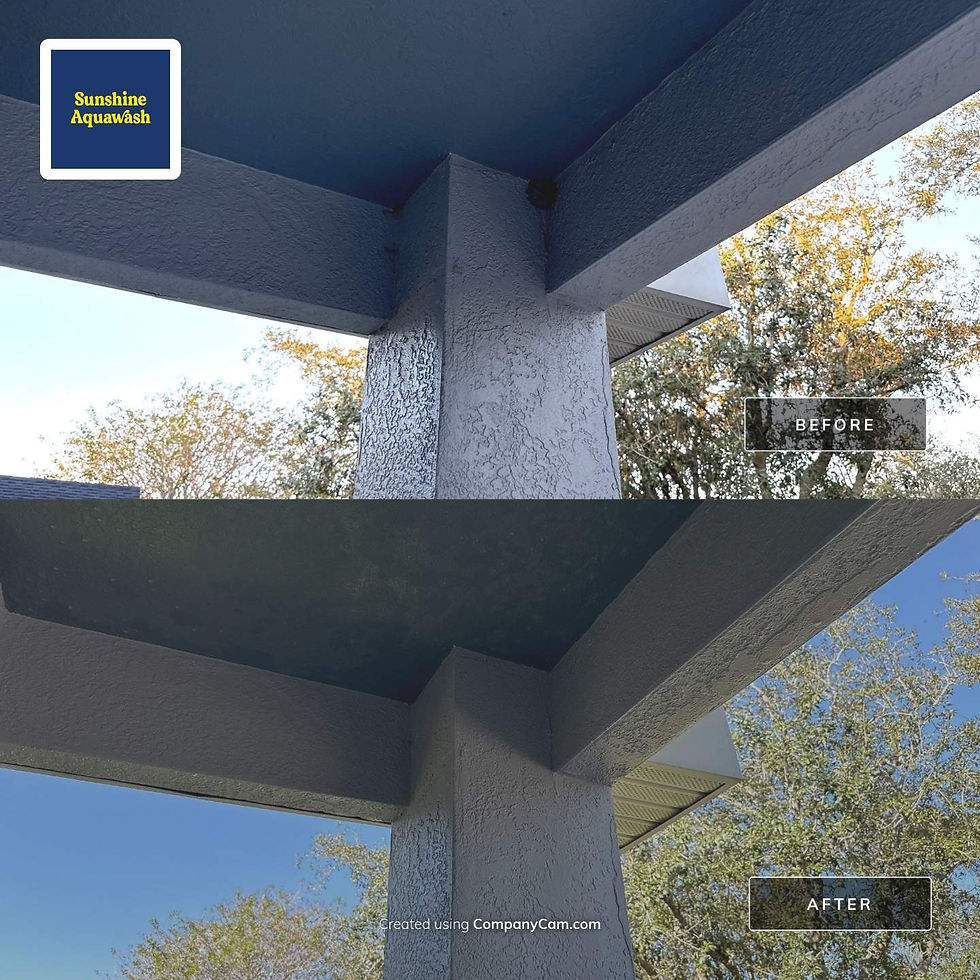
During our house washing, lanai cleaning, pool cage cleaning, or roof soft washing services, we commonly remove mud-dauber nests as part of our exterior detailing.
Our process includes:
✔ Careful scraping techniques that avoid paint damage
✔ Low-pressure soft washing to remove staining
✔ Plant-safe cleaning solutions
✔ Thorough rinsing to prevent streak marks
✔ Optional full-property cleaning to eliminate additional nests and spider webs
If you’ve got nests in hard-to-reach places or want your home looking spotless again, we’re happy to help.
How to Prevent Mud-Dauber Nests in the Future
Try these simple steps to reduce nesting:
Seal cracks and openings around soffits or siding
Keep porch ceilings and walls clean
Remove spider webs regularly (they attract mud daubers)
Check shaded or covered areas during rainy season
A little preventative care goes a long way.
Need Mud-Dauber Nest Removal or Exterior Cleaning? We’ve Got You Covered.

Sunshine AquaWash is veteran-owned, fully insured, and proudly serves:
Bradenton, Palmetto, Parrish, Ellenton, Lakewood Ranch, and the surrounding Florida areas.
Whether you want a single nest removed or a full home cleaning service, we can help restore your home’s curb appeal safely and professionally.
📞 Call or Text: (813) 421-2790
📧 Email: contact@sunshineaquawash.com
🌐 Visit: Sunshine AquaWash


